Published November 3, 2026
|
1 min read
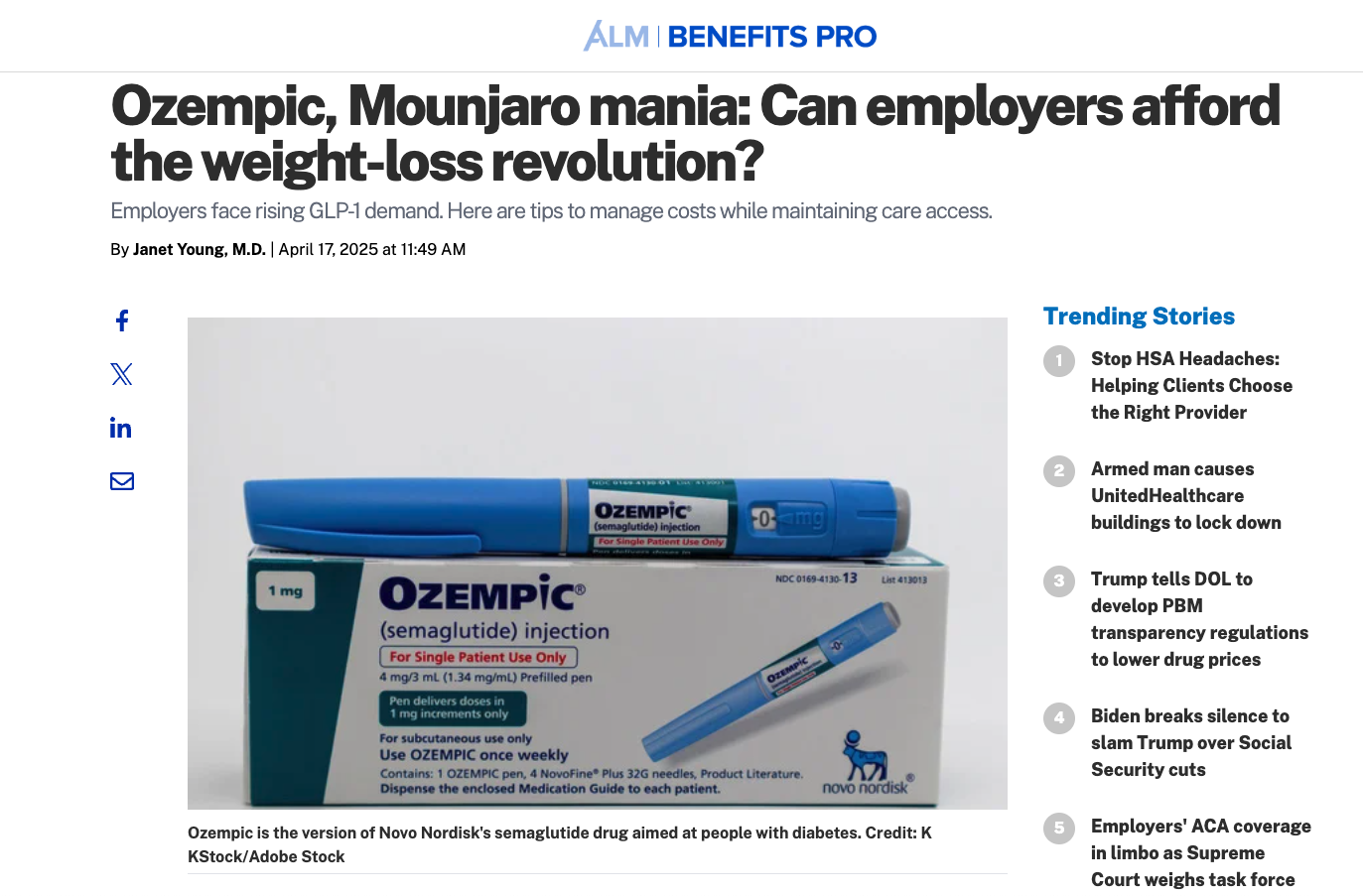
Employers face rising GLP-1 demand. Here are tips to manage costs while maintaining care access.
As GLP-1 medications like Ozempic and Mounjaro gain traction for managing diabetes and obesity, employers face escalating costs and complex coverage decisions.
In this article, Janet Young, M.D., Clinical Analytics Advisor at Springbuk, examines how organizations can navigate this evolving landscape.

Read the Article Here
Key Points:
- Rising GLP-1 Utilization: Employer spending on GLP-1 drugs has surged 272% over four years, now comprising nearly 16% of total prescription drug costs
- Understanding Usage Patterns: While media spotlight weight loss, most GLP-1 prescriptions are for employees managing type 2 diabetes, with obesity-related claims increasing but still secondary.
- Cost-Benefit Analysis: Employers must weigh immediate budget impacts against potential long-term health improvements and cost savings from reduced complications
- Strategic Cost Management: Implementing step therapy, prior authorization, and quantity limits can help control expenses while ensuring appropriate access
- Employee Engagement: Educating employees on lifestyle modifications and providing alternative programs can complement pharmacological treatments and enhance outcomes